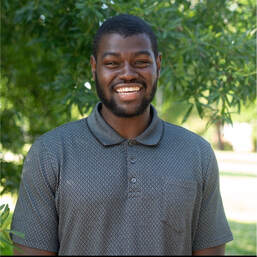
 A Detroit native, former student-athlete, and graduate of Kentucky State University with a degree in Business Administration, he is an entrepreneur and emerging sports industry professional with a passion for sports, business, networking, and professional development. As the founder of ASTAR Impact Network and ASTAR Sports Media Group, Keon has developed initiatives focused on athlete storytelling, career readiness, and creating opportunities that foster professional growth and meaningful connections. At The Trust, Keon will support communications, marketing, and engagement initiatives that help former NFL players learn about and access their earned benefits and resources. He is passionate about strengthening connections within the former player community, sharing impactful stories, and supporting work that creates lasting impact beyond the game. IG: @_workoutke, @astarimpactco LinkedIn: Keon Henderson | LinkedIn 1. Tell us about your early journey with basketball.
My early journey with basketball started when I was about five years old. My dad introduced me to the game, and from there, basketball became a huge part of my life. I remember practicing around local high school teams, going to basketball camps during the summer, watching games on TV, and going to NBA games. I loved the atmosphere, the interaction with the players and mascots, and just being around other people who loved the game. But what really stood out to me was the community. At basketball camps, I was meeting friends, eating lunch together, joking around, competing, and just having fun. Basketball was always more than just a sport to me. It was fun, family, and community. Those experiences made me want to continue pursuing the game at a higher level. 2. You attended Kentucky State as a student-athlete and served as a leader on the men's basketball team. What was one of the biggest lessons that being a collegiate athlete taught you about yourself? One of the biggest things basketball taught me is that I can endure more than I think I can. There were challenges and obstacles that felt overwhelming in the moment, but eventually I learned that no challenge is too big for you if you're willing to keep going. I always think about your future self looking back at your present self and saying, “You did that. It was nothing.” Something might be in your way right now, but that doesn't mean it's going to stop you. Your future self is going to look back and realize that you overcame it. So I learned not to fear obstacles, but to understand that they're part of the process of becoming who you're supposed to be. 3. You graduated as the 2026 Salutatorian of your class. How did you balance athletics and academics? Any habits, routines, or sacrifices you can share? For me, it really came down to discipline over motivation. Motivation is great, but motivation eventually runs out. Discipline is what makes you get up, finish the assignment, go to practice, handle your responsibilities, and keep moving even when you don't feel like it. I also relied heavily on routines and checklists. I wanted to make sure that whatever I needed to accomplish that day was actually accomplished. If something wasn't done, I didn't feel comfortable just ignoring it. I also learned to prioritize. For me, I keep God first, my family, then school and basketball, and then everything else. The important thing is that your daily habits should support your priorities. If something is important to you, your daily actions should reflect that. 4. When you were named Salutatorian, you reflected on habits rooted in discipline, balance, and consistency. Can you elaborate on that? I think success is less about doing something great one time and more about doing the right things consistently. Discipline creates consistency, and consistency creates results. There were days when I didn't necessarily feel motivated to study, practice, work, or handle everything I had going on. But I understood that if I wanted a certain result, I had to consistently put myself in a position to achieve it. Balance was also important because I had athletics, academics, work, and my personal life. I couldn't give 100% of my time to one thing and expect everything else to work out. So I learned to manage my priorities and make sure my habits were aligned with them. That's what discipline, balance, and consistency meant to me. 5. How and when did you begin thinking about developing your identity beyond basketball? Or do you feel this is an ongoing process? I actually started thinking about my identity beyond basketball when I was really young. When I was in elementary and middle school, I was involved in a leadership organization where I worked with my principal and other students to be positive examples for other young men in the school. We helped students, hosted tutoring sessions and advice panels, and talked about how students could be successful academically. I met with my principal regularly to discuss ways we could improve initiatives within the school. So even though basketball was a huge part of my identity, I was also learning that I could be a leader, a mentor, an advocate, and someone people could come to for advice. I think that's still an ongoing process. Basketball opened a lot of doors for me, but I've realized that the person I am beyond the game is just as important as the athlete I was on the court. 6. As an athlete, how important is it to have the right people around you—individuals who support you and challenge you? It's extremely important. The right people aren't just the people who tell you that you're doing a good job. They're also the people who challenge you and ask, “How can this be better?” I don't think you should take somebody questioning or challenging you as an offense. You should take it as somebody wanting you to become better. I like to think about it like a road trip. If you're driving somewhere and you're going in the wrong direction, you want the person sitting next to you to tell you that you need to turn left or right. You don't want them to stay quiet just because they're afraid of offending you. That's how I view mentors, parents, advisors, coaches, and people in your circle. They should be willing to challenge your thinking, your habits, and your decisions. Sometimes critique is actually a form of support. The people who genuinely want you to become better are going to be honest with you. 7. Tell us about ASTAR Impact Sports Network. ASTAR Impact Sports Network was created to bridge the gap between access, resources, and opportunity. It's a community and networking organization designed to support student-athletes and students who are pursuing careers in the sports industry. I believe it's bigger than simply helping someone get a job. It's about creating a community of people with similar interests, goals, and ambitions who can learn from each other, connect with each other, and help each other move forward. I've always believed that two brains work better than one. You have two ears and one mouth for a reason—you can listen, learn, and gain perspective from other people. ASTAR is really about bringing people together so they don't have to navigate their career journey alone. 8. What inspired you to create ASTAR? What type of impact do you ultimately want the organization to have on athletes and young people? The biggest inspiration was seeing the gap between people who have talent and people who have access. Sometimes it's not that someone isn't capable. They simply don't know who to talk to, where to look, or what resources are available. Through my own experiences, I realized how valuable community and connections can be. You don't come into this world knowing how to do everything on your own, so why would we expect someone to figure out something as complex as a career or their future completely by themselves? Ultimately, I want ASTAR to create opportunity and access. I want people to have resources available to them. I want them to meet people they wouldn't have otherwise met. I want them to discover careers and opportunities they didn't know existed. If someone joins ASTAR and walks away with one connection, one opportunity, or one piece of information that changes the direction of their life, then we've created an impact. 9. What do you believe athletes need to understand about building their personal brand, creating opportunities, and preparing for life after sports? Athletes need to understand that their personal brand is bigger than their performance. It's not just how many points you score, how many games you play, or how many practices you attend. Your brand is who you are as a human being. Sports teach you so many things—leadership, resilience, teamwork, discipline, communication, accountability, and how to overcome adversity. Those skills don't disappear when your playing career ends. You can take them into business, education, entrepreneurship, marketing, coaching, and so many other areas. You also have to understand your story. Where did you come from? What have you overcome? What have you learned? What makes you different? Your story can open doors for you, but it can also open doors for other people. Your brand isn't just about yourself. It's about the people you can impact, the opportunities you can create, and the people who may see themselves in your journey. 10. What advice would you give a current or former athlete, especially someone 2–5 years removed from sports, on how to transition to life after sports? First, appreciate your time in the sport. Think about the last team you played for, the last coach you had, the last teammate you interacted with, or the last person you met because of your sport. Reach back out to them. Rekindle those relationships. Your athletic career was about more than your performance. You were part of a community. And that community can still be valuable after sports. Your former school, team, coaches, teammates, and athletic network can introduce you to people, opportunities, jobs, mentors, and experiences that have nothing to do with your sport. So don't look at the end of your playing career as the end of your athletic identity. Look at it as an opportunity to leverage everything the sport gave you. The discipline, relationships, confidence, resilience, and leadership you developed are still yours. Your career may have moved beyond the court, but the value of what you built on the court doesn't disappear.
0 Comments
 "Austin Sanders is a 3X all-conference offensive tackle that played at Mercer University. During his athletic career, he developed skills that helped him navigate the football playing field. When it came time to transition from sports to the sport of life, the same skills that allowed Austin to excel in his sport have continued to be useful.
While working to best utilize the talents that became visible to him during his playing years, he learned that he could use his experiences and skills to make a difference in others' lives; by combining his want to help others and his storytelling ability, the chapter entitled "The Game is Played Above The Shoulders" was manifested. It is Austin's hope that his experiences can help other athletes reclaim their identity and adapt with life." 1. Tells us about your collegiate career as a football player. I had a good career as an offensive lineman. After starting at offensive tackle during my freshman year at Mississippi Valley State, I comprised a highlight tape that was good enough to catch the attention of many offensive line coaches at other Division I and 2 schools. After many negotiations, I was able to transfer to Mercer University on a full athletic scholarship. I had to sit out and use my redshirt for the first year I was there but as soon as that season ended, I became a starter at right offensive tackle the following season. That season 2017, I earned second team all- conference honors. I earned first-team all-conference honors in 2018 and second team all-conference honors in 2019. 2. How was your transition out of football? My transition out of football felt dramatic but it was refreshing. Having to make the decision to become more than just a football player to continue to grow in life felt colossal at the time. It felt like I was jumping into the unknown and I felt a directionless sadness for about a week. Then I watched an episode of Shark Tank and realized that most of the inventors on that show were short and didn't need to use their body to make a living. They were just people that learned a different game than I did. It made me feel like all I needed to do was learn more skills and eventually, I would be able to be as good at something else as I was at football. 3. How important is it for athletes to develop and identity outside of sports? It is crucial for athletes to have an identity outside of sports because their sport is only an occupation- a temporary on at that. Discovering my identity through understanding the person I am instead of simply attaching it to something outside of myself has been helpful to me. I feel we all can discover ourselves by examining the patterns throughout our lives. 4. What characteristic or transferable skills have implemented in your career now as a property manager? Working in property management consists of going into homes in all kinds of conditions in all kinds of weather, furthermore, being able to handle projects of different sizes. Football taught me discipline, organized effort, creative problem solving, and leadership which are all skills that I employ on a daily basis to handle my responsibilities in my career and in my personal life. 5. As a first-time author (The Six-Figure Athlete), what did you deem most rewarding? Also, what message did you convey in the book? As a author I found it most rewarding that I set out to use information that I know to offer to those who could benefit from it, and I was able to see it through. In my chapter, I spoke about the importance of knowledge of self and how it can help athletes find their way in life post athletics. 6. On your podcast, "Polyonymous" you discuss different books you've read, furthermore highlighted multiple gems learned from reading each book. What influence you to create this podcast? In 2018, after many people suggested that I start a podcast, three of my friends and I started a podcast about the unorthodox topics we normally spoke about in our free time; like the need for boycott buttons, homoerotic locker-room behavior in homophobic sports, and other things like that. We stopped in the same year, but people kept asking me to start it back up for a little over three years. I wanted to speak about something I cared about that would be useful for others. That's when I had the idea to make a podcast about the books I read and how they evolve my thinking. 7. The Richest Man in Babylon is highlighted on your podcast. Is that your favorite book? If so, please elaborate why. The Richest Man in Babylon is one of my favorite books because it helped me to understand that ever-elusive topic of personal finance and it made the information interesting enough to remember by telling it in story format. It is mentioned by many notable entrepreneurs and business pundits like Jim Rohn, Freeway Rick Ross, my high school principal Dr. Brian Bolden, and a plethora of other names. It typically makes me feel like I'm on a good path when I'm doing the same things as people that have succeeded at things I want to do. 8. What other books have you read that has helped you along your journey? Other books that I have read that helped me include: The Four Agreements by Don Miguel, The Secret by Ronda Byrne, Ridin' with Rick: The 21 Keys to Success by Freeway Rick Ross and Kolie Krutcher, B.O.S.S. Moves by Myron Golden. Battlecry: Waging and Winning The War. Within by Jason Wilson and The Big Leap: Conquer Your Hidden Fear and Take Life To The Next Level by Gay Hendricks. 9. What can we do as former athletes to continue to motivate athletes to find success beyond the playing field? The best motivation is giving those that come after us a successful image and path to follow. We must find out how to continuously achieve our personal goals so that the people looking for examples can identify us as examples, and we have learned as much as possible that can get them where they are trying to go on their journey. 100 Black Men of America organization's slogan reads" What they see is what they will be". I agree with this completely. If they see former athletes succeeding and enjoying life post-athletics, they'll become successful people that enjoy life post-athletics. 10. Give advice to younger Austin, the football player. I would tell the following to my younger self: a. There is almost never a need to rush. Consistent effort will get us everywhere we need to go b. There is always someone, somewhere that can teach you what you want to know c. "Wealth is being able to convert knowledge and experience into capital and equity" d. The way you do anything is the way you do everything so however you achieved in your sport will be the way you achieve afterwards. e. It takes same amount of energy to come up with excuses that it does to come up with solutions. f. Everything you listen to and watch creates your world. Are you making a world you enjoy? g. Reading the experiences of others saves time and builds the mind h. Above all else, learn to trust yourself and learn to forgive yourself in all circumstances
Dr. Sarah Lepe
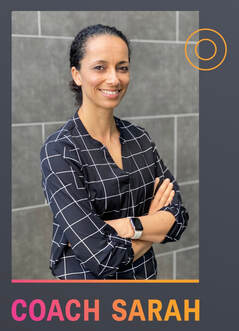
Author and Transition Coach Rebranded Athlete was founded by Dr. Sarah Lepe who is a former Division I Cal State University, Fullerton Volleyball Alumni. Athletics played a tremendous role throughout Sarah’s life and especially in pursuing her career goals. After the final whistle of her last game, little did she know what a challenge it would be to transition out of athletics and pursue her career. Rebranded Athlete is on a mission to help 98% of college athletes who don’t go pro, confidently pivot from the game into life after graduating. Sarah completed her Doctorate in Education with an emphasis in Transformational Leadership from Concordia University. She is passionate about helping athletes understand their purpose and drive them towards their career, reaching their full potential as they make the transition out of athletics. 1. Tell us about your background and what influenced you to create Rebranded Athlete. I grew up around sports around the age of 5. I have always been drawn to being part of the athletic world. When I ended my athletic career and transitioned into life after sports, I struggled tremendously. It took me 6 years to finally land a job in my career and when I needed a coach the most I didn’t have one. 2. Reflecting on your journey………why is it important for athletes to develop a plan while they are still actively participating in sports? It will be here sooner than you think. Preparation is the key to success. We spent so much time preparing to get to college that we need to spend the time focusing on how we are going to transform our talents into other areas of our lives. Being an athlete will always be part of who we are, but that does not define who we are. We are more than our sports and we have to find a way to take our skill set and apply it elsewhere. The world needs us! 3. You coined the four different types of athlete (the quitter, the lost athlete, the stuck athlete, the rebranded athlete) Working with former athletes in your academy, which athletic identity most athletes start from? Furthermore, have you experienced where an athlete is stuck but regresses to the lost athlete? Most of my clients identify with being stuck. They have tried a few things and have listened to some advice, but nothing has worked for them. This is really where having a coach is so important because the coach can help them see where they are actually stuck. Luckily, I have not experienced regression, but I would imagine if my clients are not giving the experience their all and trusting the process then they could regress. 4. In what week of your academy do you notice a shift in the athlete’s mindset? My clients begin to make a shift during the end of the 2nd quarter (week 3). This is the phase where they have already reflected on the value and lessons that they have learned through sports and realize how they can apply them into life after sports. In the 2nd quarter we dive deep into their purpose, discovering and uncovering more about their identity outside of athletics and what they are passionate about. They develop their core values and begin to see how they can use them as a compass to find their way and uncover what they are passionate about besides their sport. This phase they begin to see that they have a purpose beside their sport and as we turn the corner to Quarter 3, we begin to set goals and make their vision come to life by preparing to take action. 5. What have you found most rewarding from creating Rebranded Academy? Definitely hearing from the athletes I have worked with and learning about the success they have felt and had. I had one client tell me that joining my academy changed their life! I love to see my students succeed, just like when I was a classroom teacher and administrator. 6. Who is Sarah, the transitional coach vs Sarah the athlete? Also, what advice regarding life would the transition coach give to Sarah the athlete? Sarah the transitional coach has the experience and has overcome obstacles to get where she is today. She is similar to Sarah the athlete as both are competitive and driven. Coach Sarah would tell Sarah the Athlete to start thinking about life after sports sooner than she did. I would also tell her that its ok to ask for help and reach out to people when you struggle to figure out how to get to where you need and want to be. And finally, be open to new things! Get out of your comfort zone and try things. 7. What knowledge insight can we look forward to reading in your book Pivoting from the Game? My book was written as an easy read and a guide for athletes to begin to take action right away. I have added parts of my story that I hope to relate to the reader. I was once in their shoes and I want them to know that they are not alone in this process. The book is part of my coaching program and it also provides opportunities for the reader to engage and reflect right inside the book! 8. The co-author project Athlete to Entrepreneur you are apart speaks about athletes who have embark in entrepreneurship. Why do you think athletes thrive in entrepreneurship? Athletes are wired differently and we are driven. We are problem solvers because we are faced with many challenges constantly within our respective sports. Athletes thrive as entrepreneurs because they are competitive and driven, but most importantly they are self motivators. This is a key element missing for many entrepreneurs because many people have a hard time even starting. 9. Athletes are surrounding by their Circle of Love (parents, coaches, teachers, administrators, peers etc,) how important are those individuals to the athlete during the transition period? This is the most important time to surround yourself with people who will keep you on track. My goal for Rebranded Athlete is to develop a community of athletes where those in transition can go to for advice and just to have support knowing that people care about them and they are not alone. 10. What advice can you give to head coaches at the collegiate to aid in preparing their players for life after sports. Furthermore, do you believe this is an seed we should start planting in athletes at the grassroots level? Any college athletic institution should invest in not only their athletes while they are in uniform, but also when they hang the uniform up as well. Athletes need the knowledge about the transition just as they did the knowledge about their given sports program. Its important to prepare and have a game plan to get you on track. It doesn’t mean they have to have it all figure out, but at least an idea of how to navigate losing their athlete identity and attaching it to something positive in life after sports. To contact Dr. Sarah Lepe: IG: rebrandedathlete www.rebrandedathlete.com |
Archives
September 2026
Categories |

 RSS Feed